Home

Subcategories

  • Personal Safety

    Personal safety is the practice of protecting yourself from situations that could cause harm or danger. It involves being aware of your surroundings, recognizing potential risks, and taking steps to prevent accidents or threats. Personal safety covers many areas, including home security, online safety, travel awareness, and self-defense.

  • Marine Safety and...

    Marine safety is the discipline concerned with safeguarding life, property, and the marine environment from the dangers associated with maritime activities. It involves the implementation of international and national laws, safety standards, and operational procedures aimed at preventing accidents such as collisions, fires, and shipwrecks. Key aspects include vessel design and maintenance, crew training, navigation safety, emergency preparedness, and pollution prevention.

    Organizations such as the International Maritime Organization (IMO) set global standards for ship safety, pollution control, and seafarer training through conventions like the SOLAS (Safety of Life at Sea) and MARPOL (Marine Pollution) treaties. Marine safety also covers the use of safety equipment (e.g., life jackets, lifeboats, distress signals), adherence to navigation rules, and the management of hazardous materials onboard ships.

    Ultimately, marine safety ensures that maritime operations are conducted responsibly and efficiently, protecting human lives, marine ecosystems, and the economic interests tied to global shipping and ocean use.

  • Industrial safety

    Choosing the right industrial supplier can make all the difference in performance, safety, and efficiency. Ceesea Safety limited is committed to helping businesses across industries minimize downtime and maximize productivity. Explore our catalog or contact our team today to get a custom quote for your industrial supply needs

  • Instrumentation and...

    Instrumentation and Digital Devices is a field dedicated to the design, development, and application of advanced instruments and systems that measure, control, and automate industrial and scientific processes. Our focus is on integrating precision hardware with intelligent digital technologies to enhance efficiency, accuracy, and performance across diverse sectors.

  • Medical Safety

    At Ceesea Safety Ltd, we provide top-quality medical supplies and equipment trusted by healthcare professionals, clinics, and individuals. From diagnostic tools and wound care products to mobility aids and personal protective equipment, our wide selection ensures safety, reliability, and comfort. We?re committed to excellence, fast delivery, and exceptional customer service?because your health deserves the best.

  • Tools and Machinery

    Welcome to Ceesea Safety Limited, your trusted source for high-quality tools and industrial machinery. We specialize in providing durable, reliable, and performance-driven equipment for construction, manufacturing, automotive, and workshop needs. Whether you?re a professional tradesperson or a DIY enthusiast, our wide range of tools ensures precision, power, and productivity for every job.

Active filters

  • Brand: ADMIRALTY
  • Brand: COMET
  • Brand: Crewsaver
  • Brand: Hansson PyroTech
  • Brand: Philips

COMET Parachute Illuminating Rocket

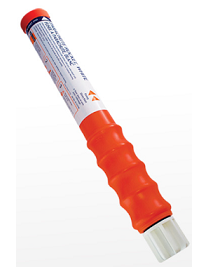
The Rocket propels a bright, white flare attached to a a parachute up to 300m. The flare descends illuminating a wide area for 30 seconds at 90,000 candela .Designed to withstand exceptional environmental exposure and to perform reliably even after immersion in water, the pull wire ignitor and improved grip provides easy handling.

The Comet Parachute Illuminating Rocket is used in Search and Rescue operations at night or for collision warning. Designed to withstand exceptional environmental exposure and to perform reliably even after immersion in water, the pull wire ignitor and improved grip provides easy handling. The rocket ejects a white flare

suspended on a parachute at 300m (1000ft), which burns for 30 seconds at 90,000 candela.?
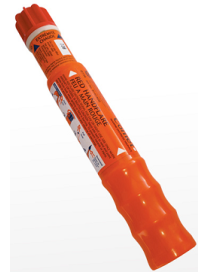
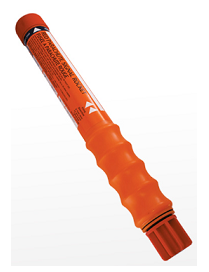
COMET Red Handflare

Unique, compact, telescopic handle allows easy extension for safe operation and saves space when stowed in liferafts.

The Handflare MK8 conforms to SOLAS 74 as amended. Designed to withstand exceptional environmental exposure and to perform reliably even after immersion in water. Featuring a telescopic handle with improved grip, making it very compact for stowage. Easily extended for safe handling and operation by pull wire ignitor. Produces hot red flame for 60 seconds at 15000 candela.

COMET Parachute Rocket Red

Long range,day and night distress signalling rocket. Designed to withstand exceptional environmental exposure and to perform reliably even after immersion in water. Features improved grip for easy handling and conforms to SOLAS 74/88 as amended. Rocket propels a red flare attached to a parachute to 300m and burns for 40 seconds. SOLAS requires that 12 rockets are carried on Ships Bridge and 4 rockets are fitted in liferafts and lifeboats. Also used by leisure craft.

The Comet Red Parachute Signal Rocket conforms to SOLAS 74 as amended. Designed to withstand exceptional environmental exposure and to perform reliably even after immersion in water, the pull wire ignitor and improved grip provides easy handling.?

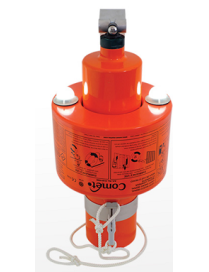
COMET Light & Smoke Signal

SOLAS requires one of these markers to be mounted on each bridge wing attached to a 4kg lifebuoy. Mounted in its steel bracket on each bridge wing attached to a lifebuoy. Signal can be mounted up to 56m above sea level. (SOLAS only requires>30m). Produces dense orange smoke for 15 minutes and 2 LED lights burn at 2 candela for 15 hours minimum. Signals location of a man overboard by day or night.

The Light and Smoke Lifebuoy Marker produces dense orange smoke for 15 minutes and features two self contained, inversion switched, LED lights which far exceed SOLAS requirements for output and duration. Ships are required to carry 2 markers, one mounted on each bridge wing with the brackets supplied and attached by line to a 4kg Lifebuoy.

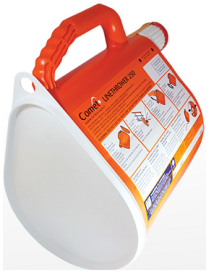
COMET Linethrower 250

A self-contained line-throwing appliance consisting of a plastic case with an end cap and 250m of line, an integral striker mechanism plus a rocket.

To comply with SOLAS requirements, four complete rocket and line assemblies (Art. No. 9160400) should be carried on board. The device has a throwing range of between 230m and 250m. A solid propellant is used which guarantees a highly accurate flight path even in strong sidewinds.

COMET Linethrower 250 Rocket

SOLAS typically requires that 4 Linethrowing appliances are carried by ships.

A self-contained line-throwing appliance consisting of a weatherproof plastic casing with end cap, twist-grip trigger assembly, rocket and line. To comply with SOLAS requirements, four complete rocket and line assemblies (Art. No. 9160400) should be carried on board. The device has a throwing range of between 230m and 250m. A solid propellant is used which guarantees a highly accurate flight path even in strong sidewinds.

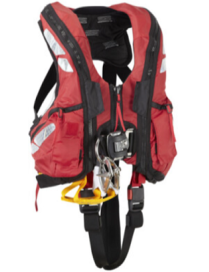
CREWSAVER Offshore 290N Lifejacket

A waistcoat style, the Offshore 290N has open sides and a versatile adjustment system allowing it to fit most adults. It has one automatic inflation chamber and a second manually operated chamber. The first chamber activates automatically on water entry to enhance your mobility when swimming, moving around and performing rescues. The second chamber can then be activated manually if required to give the full 290N buoyancy. This makes the lifejacket ideal for use in extremely rough conditions, or when supporting a survivor in the water. Each chamber is fitted with a 60g CO2 cylinder.

Complete with all the safety features you would expect from a professional lifejacket, the Offshore 290N includes twin flare pockets, integrated safety line, spray hood and thigh straps.

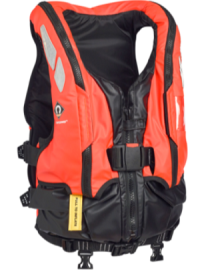
CREWSAVER Evolution 250N Lifejacket

Constructed with 60N of inherently buoyant foam, a 190N quick turn inflation chamber provides you with all the benefits of a buoyancy aid coupled with the increased safety of a lifejacket.

The Evolution 250N is available in Manual or Automatic inflation option. With the Manual version you can enter and work safely in the water ready-buoyed with 60N of foam and with the option to inflate the lifejacket if required. With the Automatic operation, should you fall into the water, the Evolution 250N inflates automatically to ensure your safety. Both models are single chamber jackets that use a 38g CO2 cylinder. This can be removed from the jacket for service and repair as required.

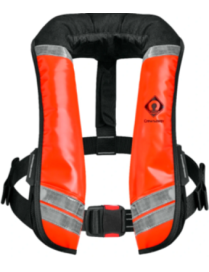
Crewfit 150N XD Wipe Clean Lifejacket

Fusion 3D technology provides complete freedom of movement and ensures the lifejacket remains comfortable even during long periods of use, whilst the unique design with built-in twin waist adjusters allows for easy donning.

The wipe-clean cover helps to ensure increased longevity when used continuously in the harshest of working environments, whilst the 500D fabric shoulder panels retain a comfortable fit.

The 150N bladder outperforms approval and offers 190N worth of buoyancy. The unique buoyancy distribution provides exceptional turning solutions even when wearing heavy clothing. The bladder is highly visible on inflation and hosts an impressive array of features including built-in chin support, location beacon attachment points and dual lifting beckets.

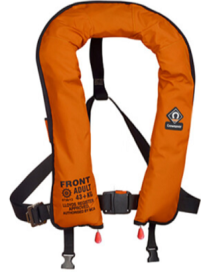
Seacrewsader 275N Lifejacket

We have also added a new, unique inflation chamber that improves turn times while providing unrivalled comfort and support. Each chamber is fitted with two 60g CO2 cylinders, activated by UML MK5i standard automatic firing mechanisms, and a 3.5 psi relief valve to ensure full buoyancy during single or double chamber inflation.

The Seacrewsader 2010 275N Twin Chamber is designed for extreme working environments and is also suitable for abandonment purposes. The high buoyancy level provides added protection when heavy work gear and clothing is worn. The new, more compact cover is constructed from a robust fabric to withstand the most arduous conditions without damage to the lifejacket and internal bladders.Alternatively there is a fire resistant version available.?

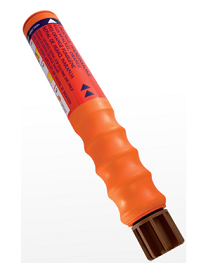
COMET Orange Handsmoke

Particularly suitable for yachts, dinghies and sailboards, this water resistant, hand- held signal produces a dense orange smoke for daylight distress signalling and wind direction indication.

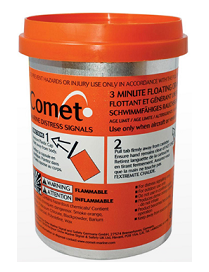
COMET Orange Smoke Signal

The NEW Comet 3 Minute Smoke Signal Orange is a compact, flat top, daytime distress signal designed to be easy and safe to handle. It provides effective position marking during rescue operations and can be used to indicate wind direction, producing dense orange smoke for a minimum of 3 minutes.

The Smoke Signal Orange is a compact, daylight distress signal designed to be easy and safe to handle. It provides effective position marking during rescue operations and can be used to indicate wind direction, producing dense orange smoke for a minimum of 3 minutes.

British Admiralty Nautical Chart 1321 Ports and Terminals in the Gulf of Guinea

British Admiralty Nautical Chart 1321 Ports and Terminals in the Gulf of Guinea. This nautical chart complies with Safety of Life at Sea (SOLAS) regulations and is ideal for professional, commercial and recreational use. Charts within the series consist of a range of scales, useful for passage planning, ocean crossings, coastal navigation and entering port.


Mariners should always use the largest scale nautical chart appropriate to their needs. In particularly busy seaways such as the English Channel, Gulf of Suez and the Malacca and Singapore Straits, the standard nautical charts are supplemented by mariners routing guides which provide advice on route planning in these complex areas

ADMIRALTY Chart - 3288 Bonny River, Ford Point to Port Harcourt

British Admiralty Nautical Chart 3288: Nigeria, Bonny River, Ford Point to Port Harcourt is a standard nautical chart. This nautical chart complies with Safety of Life at Sea (SOLAS) regulations and is ideal for professional, commercial and recreational use. Charts within the series consist of a range of scales, useful for passage planning, ocean crossings, coastal navigation and entering port.


Mariners should always use the largest scale nautical chart appropriate to their needs. In particularly busy seaways such as the English Channel, Gulf of Suez and the Malacca and Singapore Straits, the standard nautical charts are supplemented by mariners routeing guides which provide advice on route planning in these complex areas.

British Admiralty Nautical Chart 1387 Calabar to Bata including Isla de Bioko

British Admiralty Nautical Chart 1387 Calabar to Bata including Isla de Bioko is corrected up to date.


Admiralty standard nautical charts comply with Safety of Life at Sea (SOLAS) regulations and are ideal for professional, commercial and recreational use. Charts within the series consist of a range of scales, useful for passage planning, ocean crossings, coastal navigation and entering port. Mariners should always use the largest scale nautical chart appropriate to their needs. In particularly busy seaways such as the English Channel, Gulf of Suez and the Malacca and Singapore Straits, the standard nautical charts are supplemented by mariners routeing guides which provide advice on route planning in these complex areas.

British Admiralty Nautical Chart 1385 Cotonou to Pennington River

British Admiralty Nautical Chart 1385 Cotonou to Pennington River is corrected up to date. Admiralty standard nautical charts comply with Safety of Life at Sea (SOLAS) regulations and are ideal for professional, commercial and recreational use. Charts within the series consist of a range of scales, useful for passage planning, ocean crossings, coastal navigation and entering port. Mariners should always use the largest scale nautical chart appropriate to their needs. In particularly busy seaways such as the English Channel, Gulf of Suez and the Malacca and Singapore Straits, the standard nautical charts are supplemented by mariners routeing guides which provide advice on route planning in these complex areas.

British Admiralty Nautical Chart 1386 Pennington River to Opobo River

British Admiralty Nautical Chart 1386 Pennington River to Opobo River is corrected up to date.


Admiralty standard nautical charts comply with Safety of Life at Sea (SOLAS) regulations and are ideal for professional, commercial and recreational use. Charts within the series consist of a range of scales, useful for passage planning, ocean crossings, coastal navigation and entering port. Mariners should always use the largest scale nautical chart appropriate to their needs. In particularly busy seaways such as the English Channel, Gulf of Suez and the Malacca and Singapore Straits, the standard nautical charts are supplemented by mariners routing guides which provide advice on route planning in these complex areas.

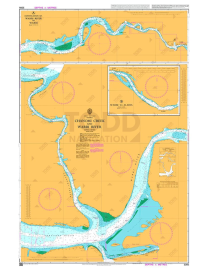
British Admiralty Nautical Chart 3305 Chanomi Creek and Warri River

British Admiralty Nautical Chart 3305 Chanomi Creek and Warri River is corrected up to date.

Admiralty standard nautical charts comply with Safety of Life at Sea (SOLAS) regulations and are ideal for professional, commercial and recreational use. Charts within the series consist of a range of scales, useful for passage planning, ocean crossings, coastal navigation and entering port. Mariners should always use the largest scale nautical chart appropriate to their needs. In particularly busy seaways such as the English Channel, Gulf of Suez and the Malacca and Singapore Straits, the standard nautical charts are supplemented by mariners routeing guides which provide advice on route planning in these complex areas.

British Admiralty Nautical Chart 3432 Saltpond to Tema

British Admiralty Nautical Chart 3432 Saltpond to Tema is corrected up to date.

Admiralty standard nautical charts comply with Safety of Life at Sea (SOLAS) regulations and are ideal for professional, commercial and recreational use. Charts within the series consist of a range of scales, useful for passage planning, ocean crossings, coastal navigation and entering port. Mariners should always use the largest scale nautical chart appropriate to their needs. In particularly busy seaways such as the English Channel, Gulf of Suez and the Malacca and Singapore Straits, the standard nautical charts are supplemented by mariners routeing guides which provide advice on route planning in these complex areas.

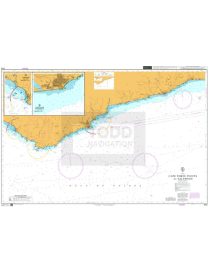
British Admiralty Nautical Chart 3113 Cape Three Points to Saltpond

British Admiralty Nautical Chart 3113 Cape Three Points to Saltpond is corrected up to date.

Admiralty standard nautical charts comply with Safety of Life at Sea (SOLAS) regulations and are ideal for professional, commercial and recreational use. Charts within the series consist of a range of scales, useful for passage planning, ocean crossings, coastal navigation and entering port. Mariners should always use the largest scale nautical chart appropriate to their needs. In particularly busy seaways such as the English Channel, Gulf of Suez and the Malacca and Singapore Straits, the standard nautical charts are supplemented by mariners routeing guides which provide advice on route planning in these complex areas.